|
Retrofit existing system to increase capacity 25% while spending less than 15% of a new line cost.
Issue: One of our customers that produces high volumes of appetizers was running out of production capability. A new line was a huge expense and a long wait from time of order to time of delivery. They were looking for a way to increase production or extend their working day. Because their freezer was not outfitted with sequential defrost, they could not run more than 18 hours without shutting the system down for four or more hours for defrost and cleaning. When they shut the system off they needed to raise the temperature in the room above the USDA requirement for total clean up.
Inspection: Michas Systems went on site with internal temperature probes and documented the entire process from raw, through frying and into the freezer. Through this process we pinpointed the exact temperature and process point where the product fried, and then what dwell and temperature the product needed to achieve the desired exit temperature of zero degrees. Our inspection also afforded us the ability to appreciate the loading and transfer issues our customer was experiencing throughout the process.
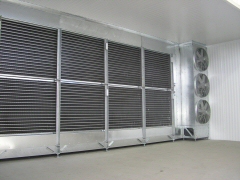
Solution: Michas retrofitted a sequential defrost system using our patented TEISD defrost system. This allowed the customer to run around the clock if desired and added over 30,000 pounds of additional production per day. Michas also repaired existing, designed new, and installed better product handling into the freezer which enabled the customer to increase over 1.5% in yield by reducing product damage, and also increased freezer loading capacity. With additional front-end make up equipment in place the customer added 25% more capacity through the same system while spending less than 15% of a new line cost and waiting less than 25% of the time to start seeing the results.
Result: Michas Systems helped our customer achieve an overall 32% increase in production using most of the equipment that was already in place, all while saving dollars and increasing throughput.
|